The honest, unfiltered story of what actually worked — and what I wish I had known before I sat down for that exam.
Passing your FNP boards is one of the most significant milestones of your career. I remember sitting in that testing center, heart pounding, wondering if everything I had studied was going to show up in the right way at the right moment. Spoiler: it did. But not because I studied harder than everyone else. It's because I studied smarter — and I had a system.
The mistake most FNP students make is treating board prep like a nursing school exam. They read every chapter, highlight everything, and hope that volume equals readiness. But the FNP boards — whether AANP or ANCC — test clinical reasoning, not memorization. They want to know: Can you think like a provider?
"The boards don't want to know what you memorized. They want to know if you can think under pressure."
What Actually Worked
1. I stopped reading and started reasoning. Instead of re-reading my textbooks, I started working through board-style questions and asking "why" after every single one — right or wrong. The rationale is where the learning happens.
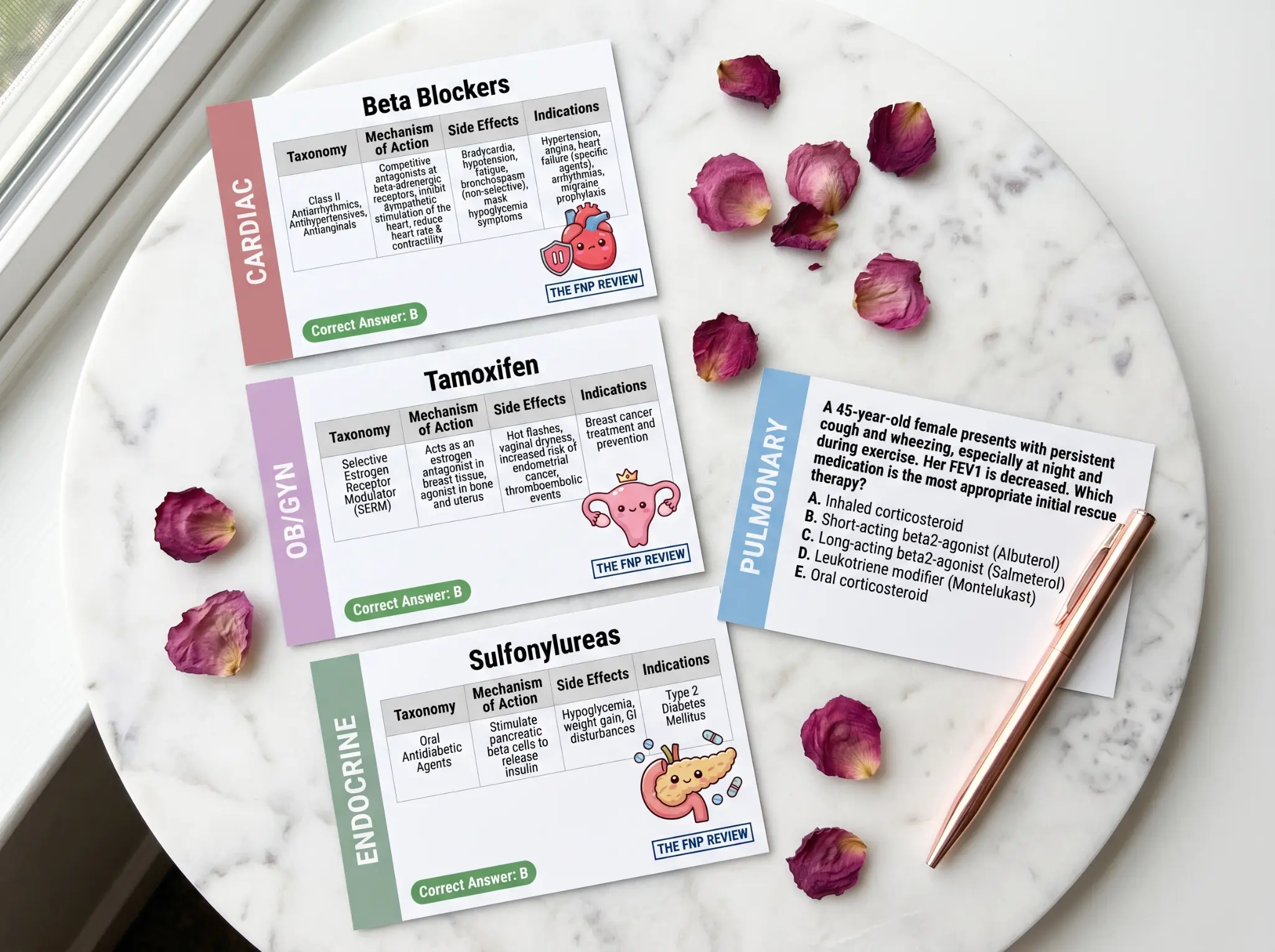
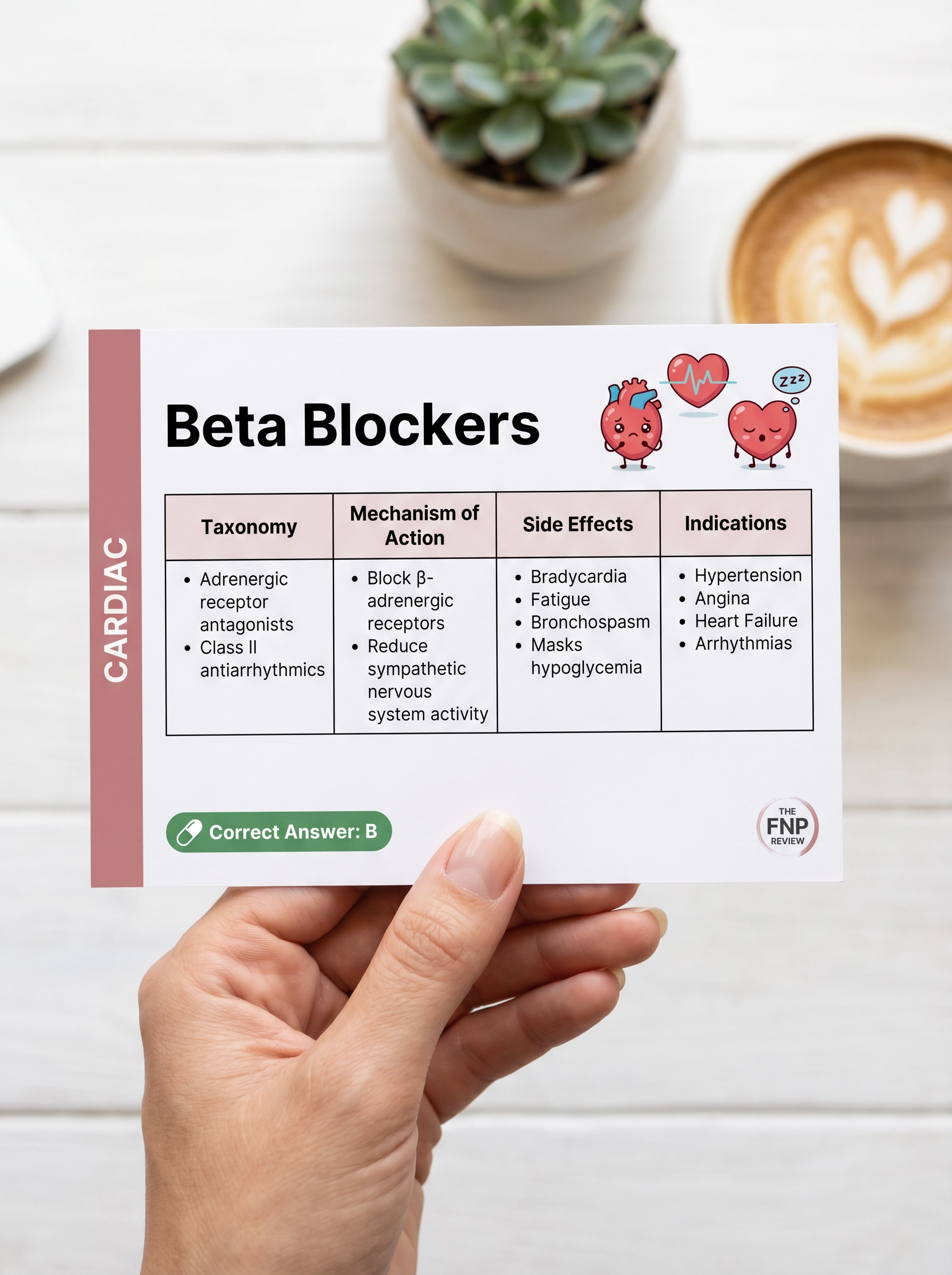
2. I built a pharmacology system. Pharmacology is where most students lose points. I stopped trying to memorize every drug and started learning drug classes — mechanisms, side effects, contraindications, and the one or two drugs in each class that the boards love to test. Once I had that framework, individual drugs clicked into place.
3. I did a premortem. About three weeks before my exam, I sat down and asked myself: "If I fail this exam, what will have caused it?" That exercise was uncomfortable — but it forced me to be honest about my weak areas and build a targeted plan instead of reviewing what I already knew.
4. I simulated exam conditions. The week before my exam, I did full timed practice blocks. Not to "get more questions in" but to train my brain for the mental endurance of a 3-hour exam. By test day, the format felt familiar.
Free Resource
Get the Free FNP Board Study Guide
A comprehensive, no-fluff guide covering the highest-yield topics, pharmacology frameworks, and a week-by-week study plan. Free, instantly.
No spam, ever. Unsubscribe anytime.
5. I trusted the process. There is a point in every board prep journey where you feel like you know nothing. That feeling is normal. It means your brain is reorganizing information. Push through it.
The Bottom Line
You don't need to know everything. You need to know the right things, in the right depth, and be able to apply them under pressure. That's what The FNP Review system is built to do.
Related: If you're still figuring out your study timeline, read What to Do If You Have 4 Weeks Until Your FNP Exam or What to Do in the 48 Hours Before Your FNP Exam.
Ready to pass?
Get the All-In-One Bundle
Everything you need to study smarter — video course, QBank, cheat sheets, and more.